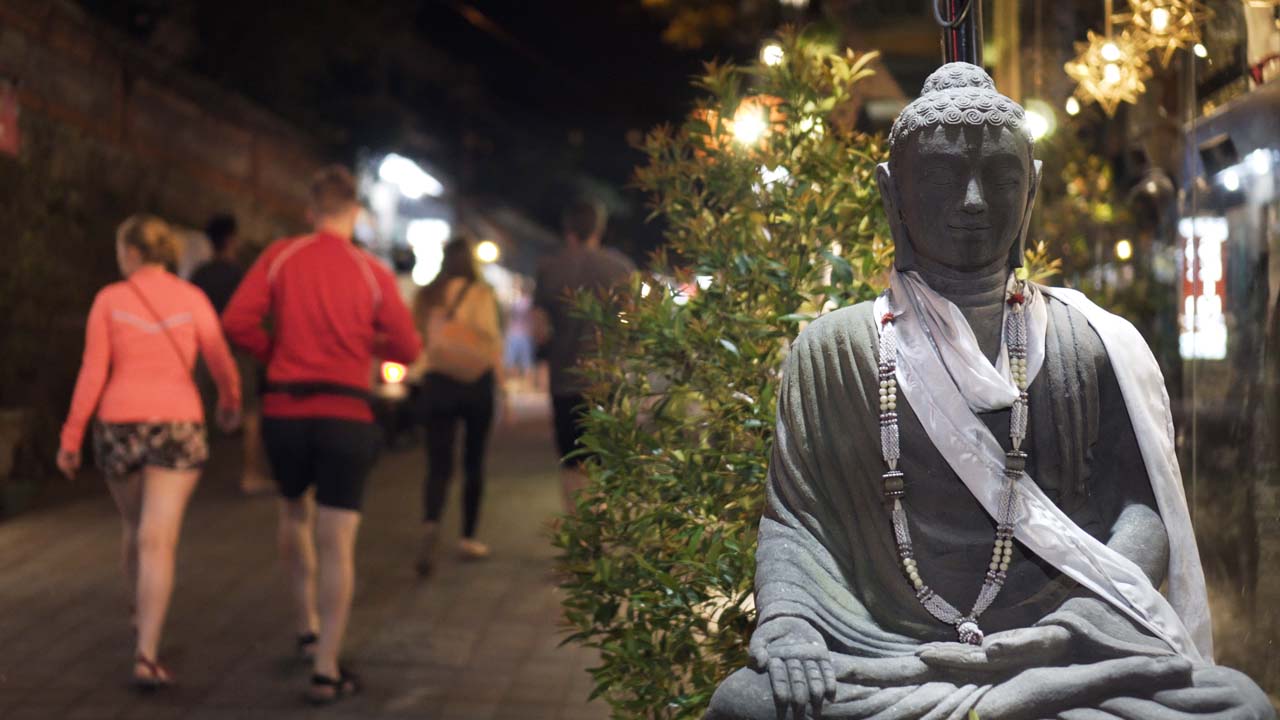
As millions of foreign and domestic tourists stream into Bali's paradises each year, fueling the $15 billion tourism economy, local women put their bodies on the line for just a few dollars a day, carrying in the building blocks of the hotels, luxury eco-villas, and new swimming pools. Is the tourism economy working for them?
The Foreigners Want Pools
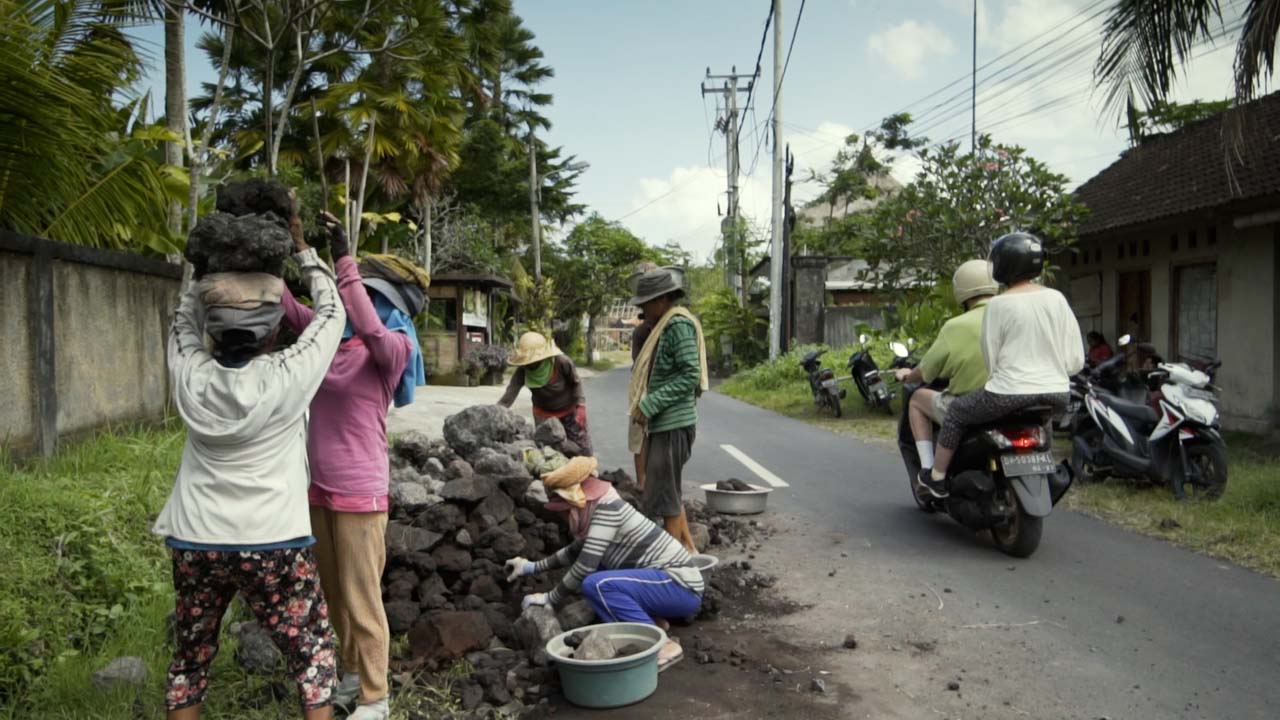
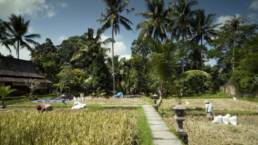
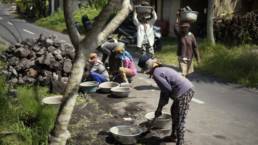
A sweltering Saturday afternoon in May. A group of middle aged women— draped in long-sleeved work clothes to protect them from the scorching tropical sun above— are hard at work along a village road in the rice fields just north of Ubud.
Despite the island-wide water shortages caused by decades of excessive water use by the tourism sector, a local land owner is building a new swimming pool to accompany a rental house on his property. Villas with swimming pools seem to get more rentals on Airbnb.
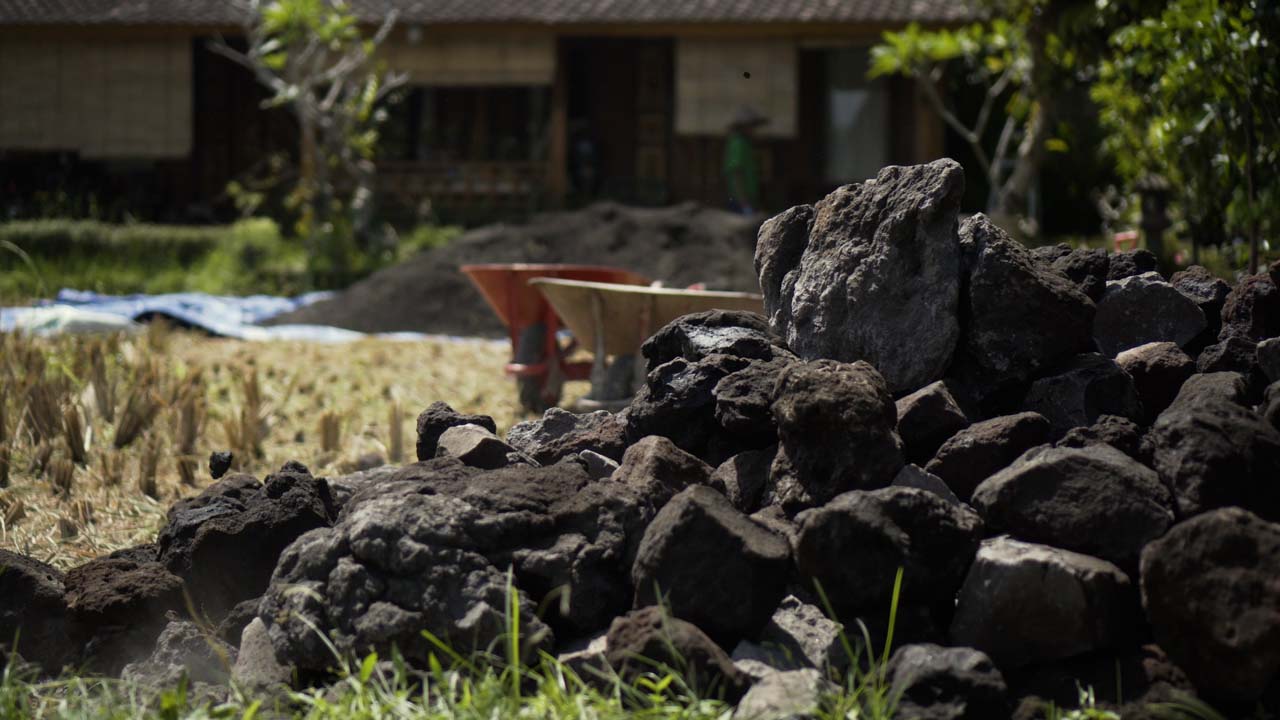
He ordered two truckloads of rock for the pool’s foundation, and they have already been dropped on the side of the road next to the property. To relocate the enormous pile boulders into the backyard, he hired a group of women. In Bali, it’s easy to find a crew of women ready do manual labor gigs like this. And cheaper.
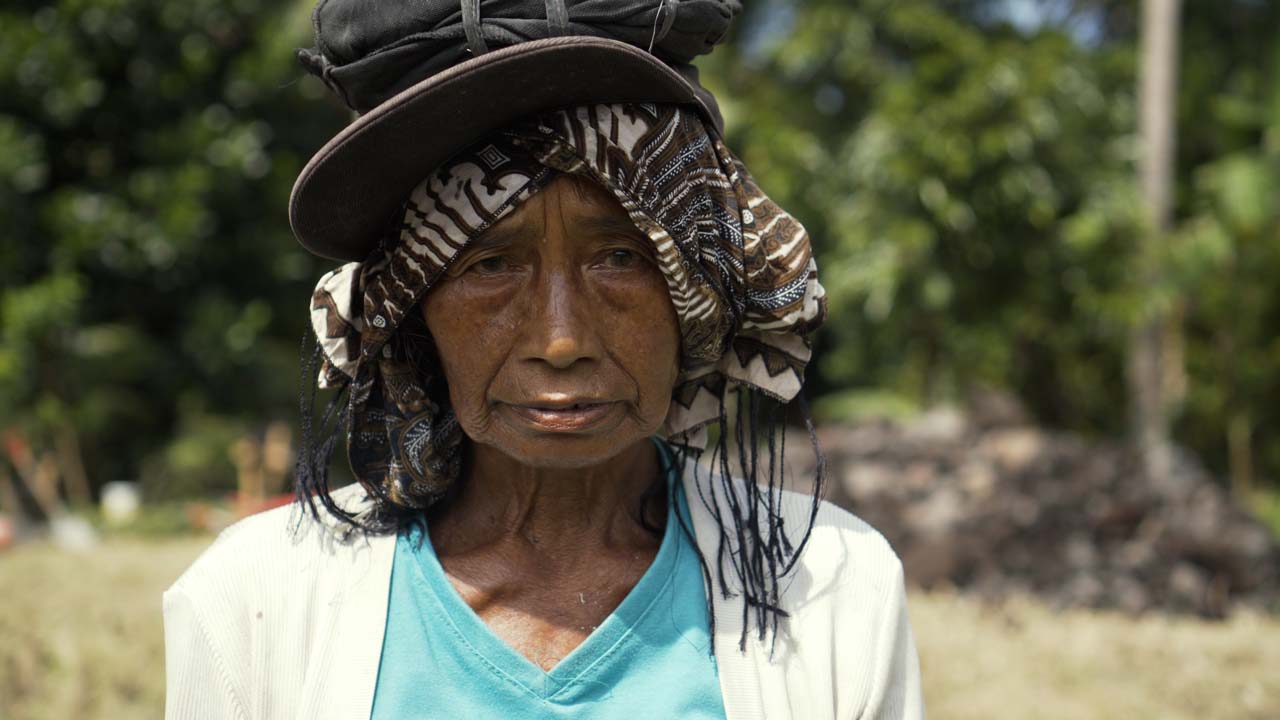
Many of the women are mothers and rice farmers from a nearby village– the kind of small village that might lose access to its water during times of peak tourist demand. But they take gigs like this to help make ends meet for their families.
Dwick, the owner of the property, is a local man in his 30’s. He’s kind, speaks good English and works at a bank during the week. He built the house on part of his ancestral family rice farm years ago to earn rental income, as more Balinese began leveraging the tourism boom in the early 2000’s and 2010’s.
The tourism economy over the last 3 decades has been transformational in Bali— it has brought jobs, modernization, and elevated tens of thousands of Balinese families into a middle class lifestyle, often to the envy of other Indonesians. Perhaps most profoundly, the tourism economy has enabled life-changing entrepreneurial and educational freedoms for those born into certain castes in Bali’s Hindu culture that had traditionally been excluded from societal advancement.
“There are so many opportunities now, for the young. Everyone can be a boss, even the lower castes can be a boss because of tourism” says Dwick.
Dwick rents the house out to foreigners and other Indonesians on a month to month basis, and hires seasonal farm laborers to maintain rice growing on the rest of the land. The growing of rice– and honoring Dewi Sri, the Balinese Hindu goddess of rice and prosperity– is still a sacred and communal value for most across rural Bali and Java, even among Muslims. But this year, he made the decision to sacrifice a portion of the field, and install a swimming pool to help his chances of competing with the nearby corporate and investor-owned villas and hotels that have pools. The data is showing foreigners prefer access to a pool.
Swimming pools can be controversial among the neighbors though. While it’s known that the urbanization, and the larger resorts and hotels in the south, are most responsible for causing the water crisis on the island, the aggregate of smaller private properties installing pools for tourists are making the issue worse.
The Balinese famously have networks of intricate, collectively maintained water delivery systems throughout the island known as subaks– some of which received UNESCO World Heritage Site status in 2012. Developed at least a thousand years ago, these subak water networks rely on Bali’s high elevation volcanic lakes, the coordination of water temples and religious ceremonies, and a sophisticated engineered system of channels and weirs that keep water flowing through others’ properties.
This water is in theory only to be used for agriculture. But during dry periods, villagers often need to supplement the subak water supply with water drawn from private wells to ensure they don’t lose valuable crops. Now, with the water tables dropping to unprecedented levels from more and more private wells coming on line, extracting scarce groundwater for pools can mean other neighbors potentially losing crops.
Half Day Gig
Dwick is there today, looking on. He just received two truckloads of the rock he ordered to use for the foundation of the new pool, and hired a female contractor to organize this team of local women to move the rock.
It’s the women in Bali— not the men— who have the better reputation in being able to haul heavy loads of rock like this with only the strength of their bodies.
He pays the contractor 1,000,000 Indonesian Rupiah ($75 USD) to move the two truckloads. Each woman will take home about $4 USD for the half day of labor— a decent rate for women in this rural area, but it’s a physically demanding job, and one that comes with a real risk of injury for aging women.
“They’re used to it,” says Dwick. “Many younger wouldn’t do it.”
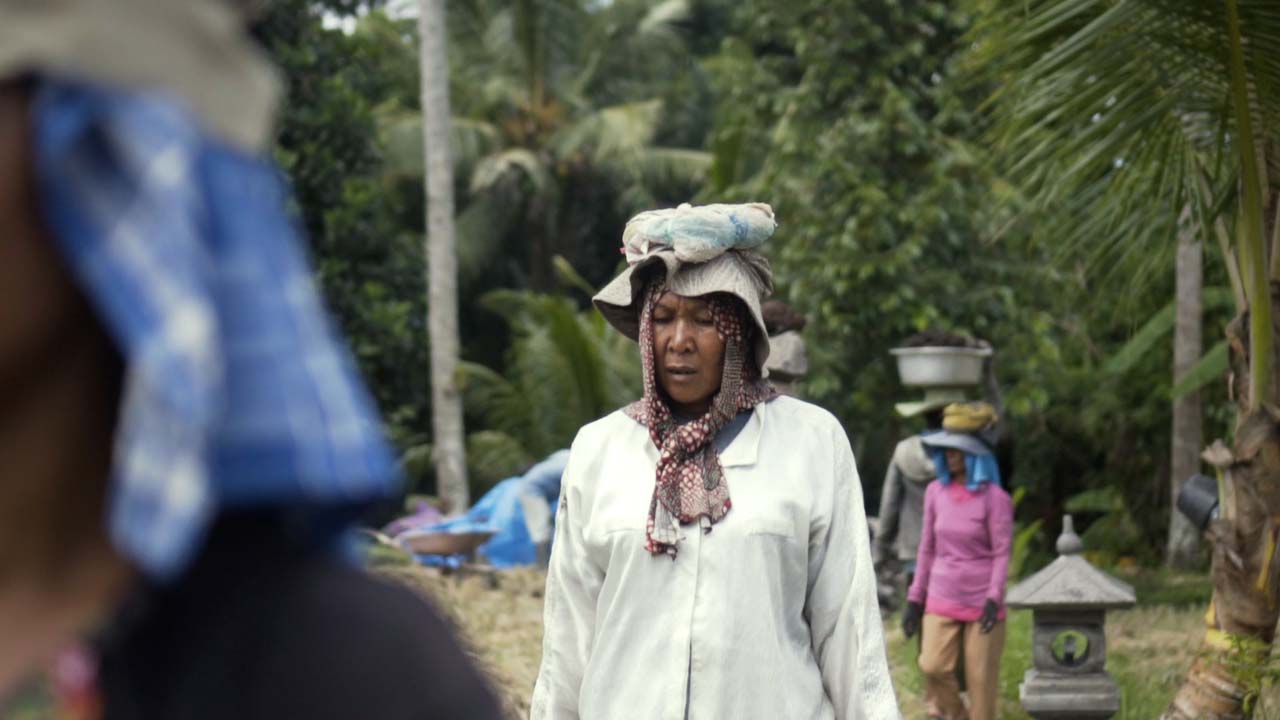
Despite the humid 90-degree heat, the women wear soiled long-sleeved work clothing— with logos such as “Hollister” and “Chicago Bulls”— to shield them from the sun.
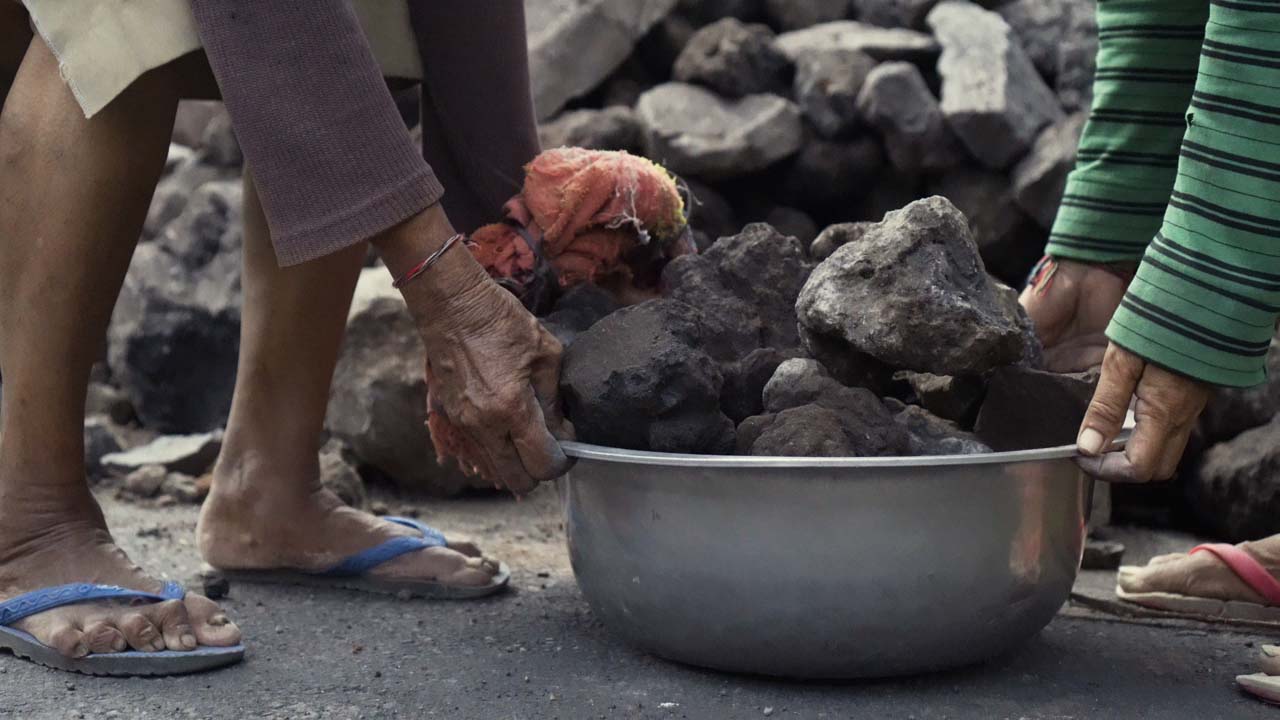
They aren’t given wheelbarrows or any helpful tools other than beat up plastic and aluminum wash bins to collect the rock.
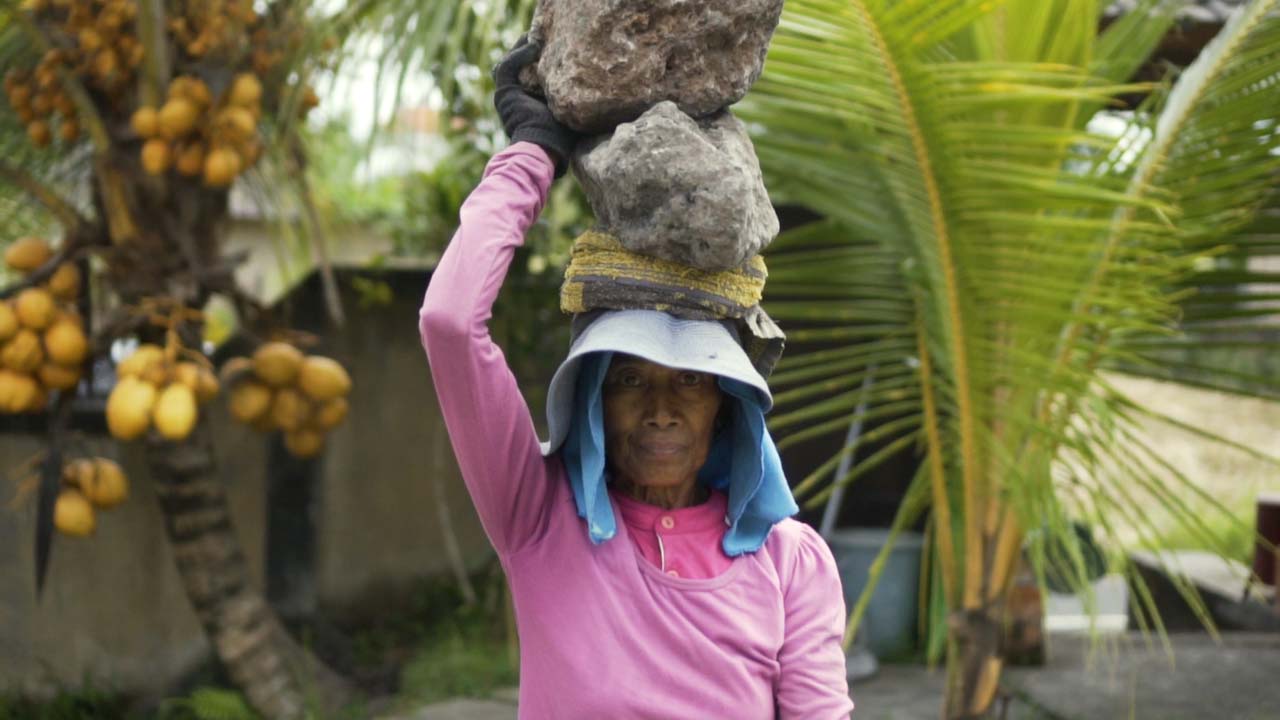
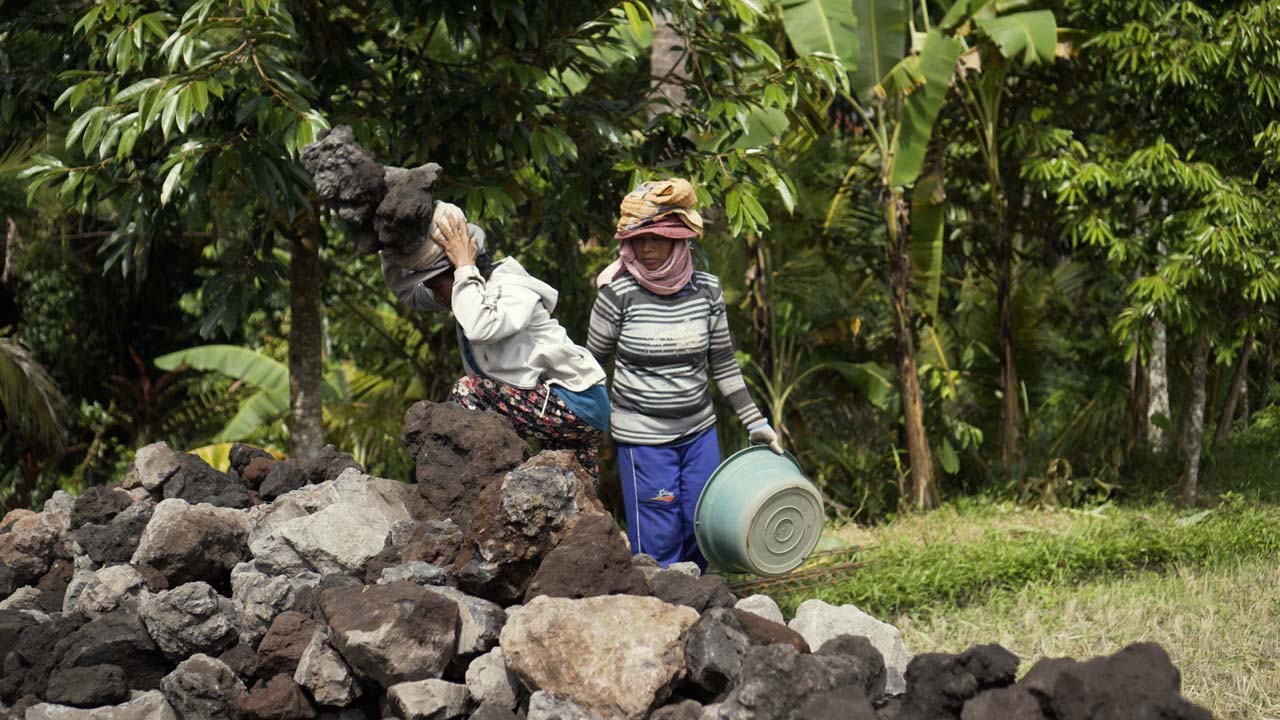
With bare hands, and the sheer strength of their thin-framed bodies, they load up old bins with rock, and with the help of another, hoist it to the top of their heads before hauling the load up a steep driveway into the property to the new pool site.
Some of the women skip the bins altogether and stack two or three boulders directly on top of their cloth turbans on their heads.
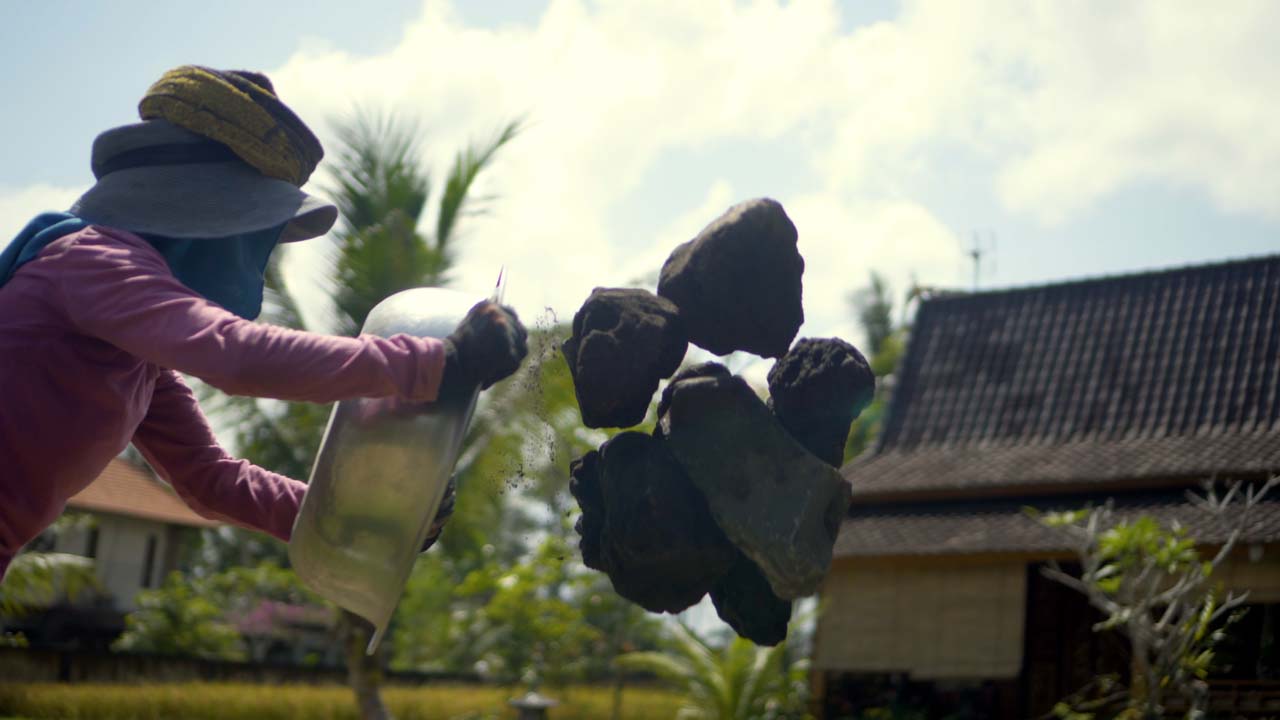
When they arrive to the growing rock pile in back, they lean forward with stiff necks, and fling off the entire load in mid-stride as the rocks crash and smack into the pile below.
It will take about 4 hours to get through both truckloads, and the contractor will pay them cash for the half day’s work.
The Skill of Head-carrying, and the risks on construction sites
Throughout much of the world, head-carrying remains the most practical and ergonomic way to carry arm loads of stuff when other forms of transport aren’t available.
And in Bali— where car ownership and transportation infrastructure is limited even in urban areas— the island’s daily economic tapestry is still made up with women and men walking along roads with all sorts of improvised arrangements stacked on their heads.
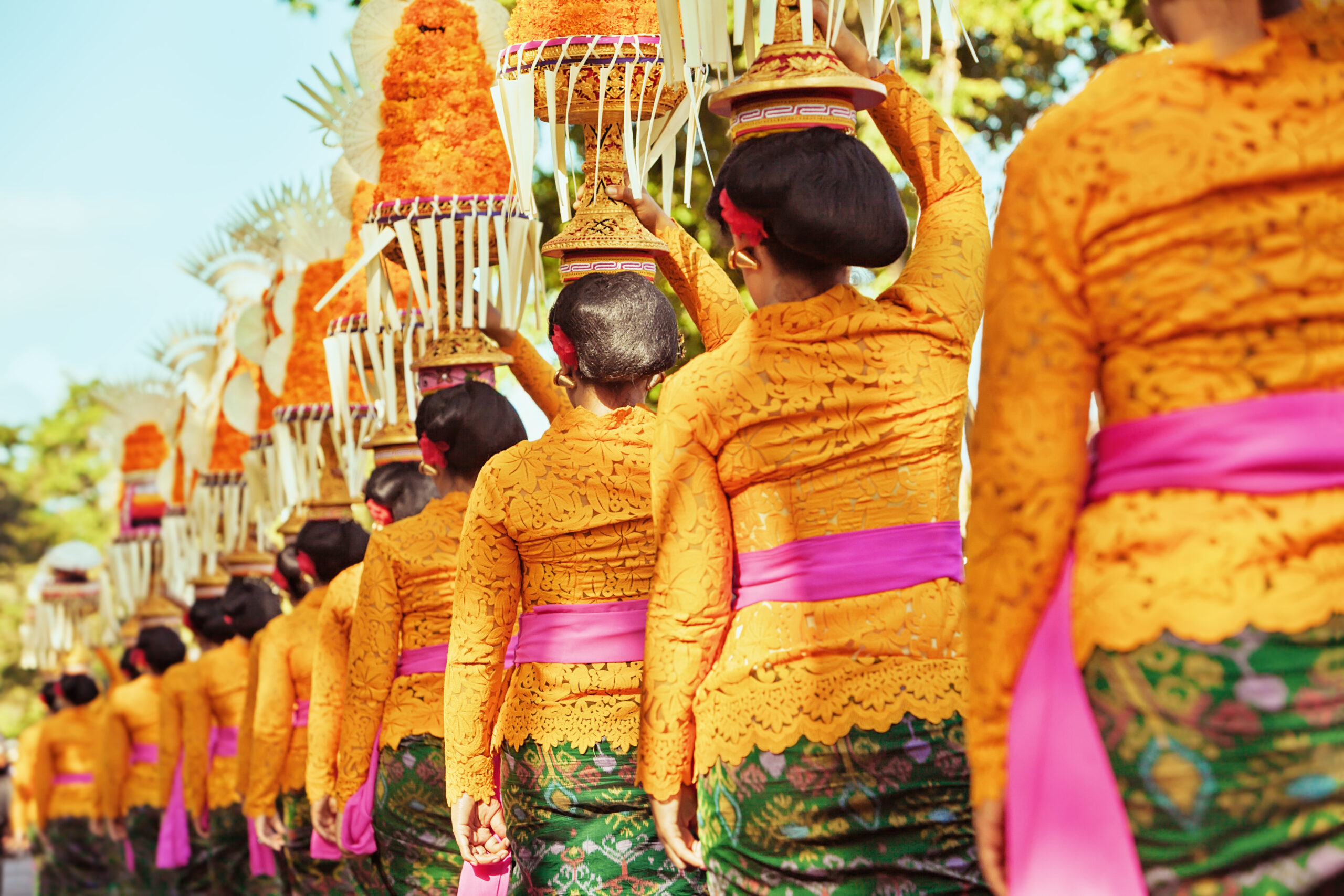
The practice even takes on a surreal sort of ritual status on holidays, when processions of women adorned in the traditional dress of matching batik sarongs, blouses and sashes walk together to temples and holy sites with head-mounted towers of fruit and other colorful offerings for their Balinese Hindu gods and local deities.
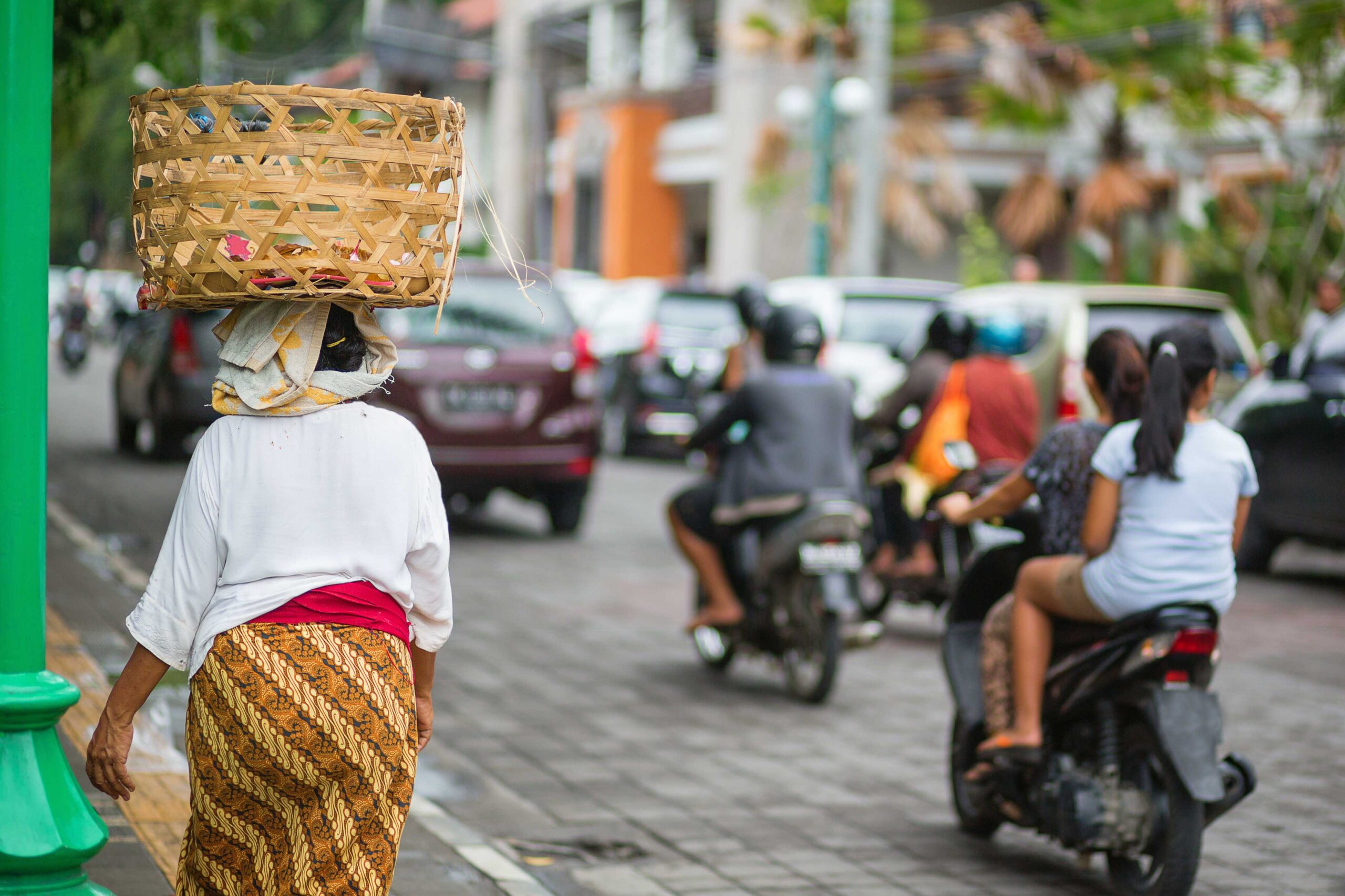

But the skill of head carrying is also being used on construction sites all around the island, as owners and contractors seek the cheapest labor to transport building materials around a site, for the tourism industry’s ever expanding new hotels, villas, and mega projects.
And despite its long-standing practice in traditional Balinese society, head-carrying the heavy and irregularly-sized loads of building materials on unregulated construction sites comes with risk of serious spinal injury – especially for aging women in a competitive group work environment.
While various studies have shown that head-carrying cultures are typically less prone to spinal injuries than in developed nations due to the natural development of muscles around the spine, our bodies inevitably become more vulnerable to injury as they age. In an informal work situation, where women are not medically-insured and might be pressured in the heat of a moment to take on more strain to their bodies than they were used to, the risk/reward is too unbalanced to be considered part of a mutually beneficial economic exchange.
And considering the would-be costs for owners and investors to rent the kind of expensive machinery like front loaders, cranes, and tele-handlers that are typically used on construction sites for these purposes– and the lack of paved roads at many of the sites to provide access for these types of construction vehicles– the true market value of these women’s skills and service is significantly underpriced.
According to an email exchange I had with American organizer Phi Kaplan, who had spent years living in Bali and doing social work with rice farmer communities to stimulate sustainable economic opportunities through her organization Sawah Bali, many women in rural villages silently suffer from spinal injuries and chronic pain, after years of using their backs, heads and necks to haul heavy loads.
“The women always carry heavy burdens on their backs, grass for the cows, wood for the stoves… The men carry the sickle.” she wrote.
While the agency of Balinese women to know and communicate the limits of their own bodies, or be able to decide what kind of work to accept isn’t in question here, it’s worthwhile for all stakeholders to recognize the structural economic forces at play that make potentially dangerous gig work like this seem attractive to someone in rural Bali— as it initially pays better, and faster, than the increasingly diminishing agricultural work around the island.
Although a construction gig may be a valuable score for many women and their families, and cited by the investor or political class as an example of the tourism economy’s “trickle down” benefits, it suddenly becomes a costly disaster for anyone who suffers an injury that results in chronic pain or the inability of family breadwinners to do future work.
Tri Hita Karana
Against a backdrop where so much investment is flowing into the area, and so many foreigners and entrepreneurs have come to stake their claim in the island’s lush paradise and low-cost luxury— all under the special Balinese brand of harmony with people and nature— it’s a stark juxtaposition to consider the reality of human exploitation that goes into building the accommodations and infrastructure of Bali’s tourism.
“Tri Hita Karana” is the Balinese philosophical principle that underlies the beauty of their culture and way of thinking. Literally it translates to “3 causes of Prosperity”, and contains.. UNESCO….
This simple but beautiful framework of thinking invites one to reflect on what impact a decision will have on the community that surrounds you, can serve as a great touchstone for those planning on visiting the special beauty and culture of the island of Bali.
As the Balinese and Indonesian governments, driven by big investors, continue to push for expanding tourism development into new areas on the island, all while Bali’s farmers and villagers continue to deal with severe water shortages and continuing disruptions and disincentives to the agrarian fabric of their local economies, it’s worth examining the connections tourism dollars have to the middle aged women in Bali needing to take gigs hauling rocks for the construction of more tourist playgrounds being built on their lands.
While the future of tourism in Bali will be determined by the leaders of Balinese society and the Indonesian government, market choices by tourists play an important role in signaling and guiding the sustainability of Bali’s continued growth, and well-being of its people.
As visitors and advocates, how might we rethink our economic relationships, friendships, and responsibilities to each other in the context of tourism?